The Local Café Ordering Checklist: What to Say, When to Pay, and How to Linger
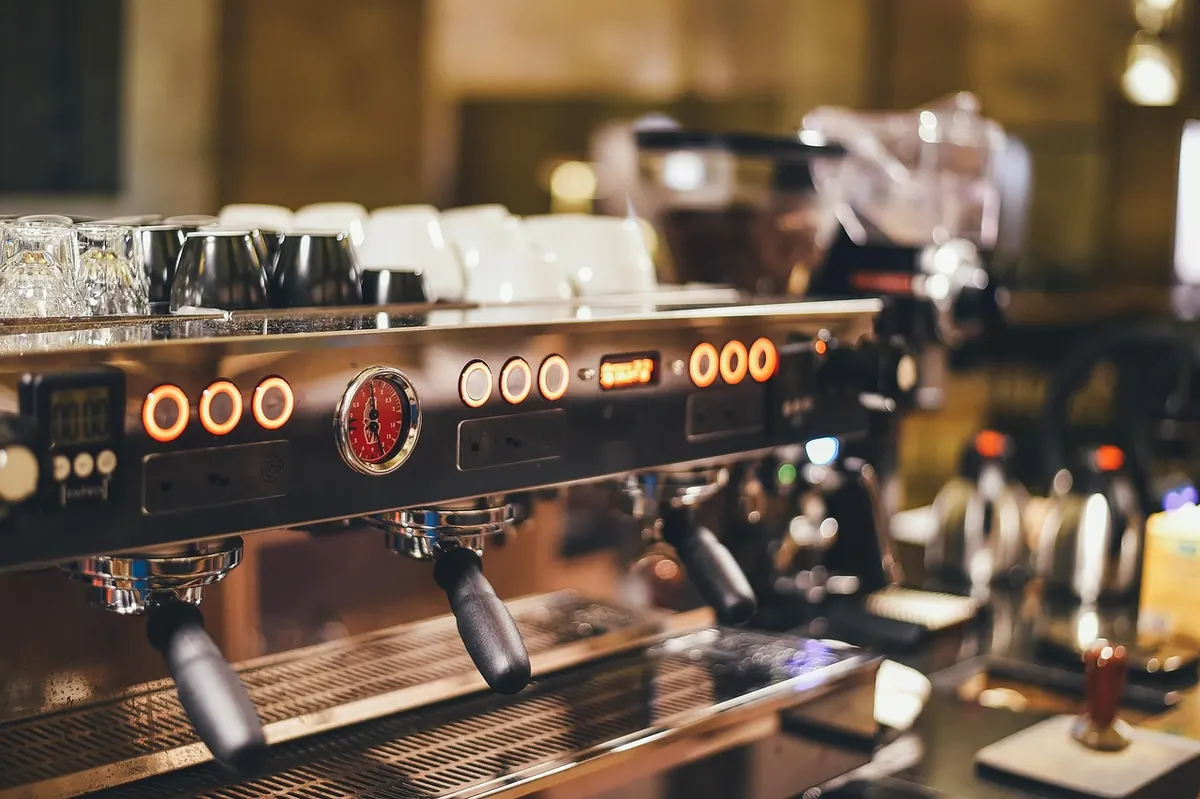
The first time you order in a café in a town you don't know, the small things give you away: hovering near the door, waiting to be seated, holding your change while the person behind the machine waits for you to decide. None of it is a scandal. But a café runs on a rhythm, and once you can hear it, the whole transaction takes about ninety seconds and feels a great deal better.
What follows is the checklist regulars carry without knowing they carry it. Not rules with penalties attached. Just the order of things — what to say, when to pay, and how long you can reasonably stay with a half-empty cup in front of you.
Read the room before you order
Stand in the doorway for ten seconds and watch. Not the coffee — the hands. Where do people go first: to a till near the entrance, to a counter at the back, or straight to a table where they sit and wait to be noticed?
Three details settle almost everything:
- A till by the door with a short queue in front of it. Pay first, take the slip, then hand it over at the bar.
- A counter with no till and no queue. Order at the bar, drink standing, pay on your way out.
- Tables with staff moving between them, or numbers on the tables. Table service. Sit, and wait to be asked.
Get it wrong once and nothing happens. Someone points at the till, you smile, you pay, you drink your coffee. But watching first saves you the small performance of being visibly uncertain in someone else's morning.
Ordering at the counter, step by step
The counter is a fast, polite, slightly musical exchange. It works best when you bring the whole order at once.
- Catch an eye. Not a wave, not a raised voice. A glance and a small nod is enough; the person behind the machine is tracking the room.
- Say the drinks first, then the food. Coffee is the main event; the pastry is an accessory. "A coffee and a cornetto" gets you further than a long description of breakfast.
- Add how you'll take it. Standing at the bar or sitting at a table changes what you're charged, so mention it if it isn't obvious.
- Be specific about the coffee, briefly. Black, with a drop of milk, in a glass, decaf — one or two words, in local terms if you know them.
- Pay where they tell you to pay, then wait at the bar with your receipt visible. Standing over the machine doesn't speed anything up.
- Drink it there. Most places expect the cup to come back to the counter, not to travel.
A line you can adapt almost anywhere:
"A coffee and a pastry, please — at the counter."
That's the whole speech. Add please, add a smile, and you've done the job.
Standing or sitting: what actually changes
In much of Italy, and in plenty of old cafés elsewhere, standing at the bar is the cheaper, faster, more social option. Sitting down usually costs more — sometimes a little, sometimes noticeably — and the difference is normally posted, either on a small sign near the till or in the menu. It is not a tourist tax and it is not an insult. You are paying for the table, the chair, the person who brings the cup to you, and the time you spend occupying a seat someone else might want.
Two habits worth adopting:
- Decide before you order. Changing your mind halfway through, cup in hand, is the one move that reliably causes friction.
- Look at the wall, not the internet. Prices for al banco and al tavolo are usually printed where you pay. If you can't find them, ask; nobody minds.
When to sit anyway
Sit if you're with someone you actually want to talk to, if you're eating something that needs a plate and a knife, if you've been walking for two hours, or if it's raining and the counter is three deep. Sit if the room is empty and the staff are wiping down surfaces — an empty café wants the company. Stand if you're in a hurry, if it's a two-sip stop between errands, or if the bar is packed and every stool is taken.
When to pay
Two systems, both normal. Pay first where there's a till by the door: you buy your coffee, receive a small printed slip, and hand it to the barista. Pay after where there's no till at the front or where the same person serves and charges: you order, drink, and settle before leaving.
Whatever the system, keep the receipt with you until you're out of the door. In Italy you can be asked to show it, and digging through a bag while someone waits is a needless way to end a good coffee. It also helps to carry a little cash; small places still appreciate it, and card machines occasionally have their own opinions.
Tipping isn't expected with a counter coffee. Rounding up, or leaving the coins from your change, is a kind gesture and nothing more than that. Nobody is counting.
The handful of words that do the work
You don't need a language course to order well. You need six or seven phrases that cover nine out of ten mornings.
- A coffee — in Italy this means an espresso, not a jug of filter. Ask for what you actually want by name.
- With a drop of milk — enough to change the colour, not enough to make it a milky drink.
- In a glass — slightly colder, slightly more elegant, same coffee.
- At the counter / at a table — the phrase that decides your price.
- To take away — worth saying clearly, since many bars assume you're staying.
- The bill — say it when you're ready, not when you're finished drinking.
- Barley coffee — the caffeine-free standby, useful at four in the afternoon.
How to linger without getting in the way
Lingering is allowed. It's just time-sensitive.
The morning rush, roughly from opening until mid-morning, belongs to the counter: people arrive, drink standing, leave. A seat taken then, with one coffee and a laptop, is a seat the café needed. Later in the morning the room loosens. After lunch it loosens properly, and an hour with a book is entirely normal — provided you keep ordering something. A second coffee, a water, a pastry at the point when you'd otherwise have been asked to move along.
Read the small signals: if the counter empties and staff start stacking chairs, the day is ending. If your cup has been cleared and nobody has asked whether you want anything else, that's a gentle question. And if you plan to work, ask first. Some places are glad of it; some are too small for it.
One quiet courtesy covers most of it: don't take a four-person table for a solo coffee at the busiest hour, and don't make the staff ask you twice.
A short checklist to carry with you
Before you push the door open, run through this. It takes less time than reading it.
- Look for the till, the queue, or the tables. That tells you the system.
- Decide standing or sitting before you order.
- Order drinks first, food second, and say it all at once.
- Pay where the room pays: at the door, or at the end.
- Keep the receipt until you leave.
- Stand during the morning rush; sit later in the day.
- If you stay longer than one drink's worth of time, order another.
None of this is a test you can fail. The people behind the counter have watched a thousand visitors learn it in real time, and they will help you learn it too — usually with a nod toward the till and a very good coffee at the end of it.
Photo: Pexels / Pixabay