How to Read a Neighborhood's History Through Its Street Names
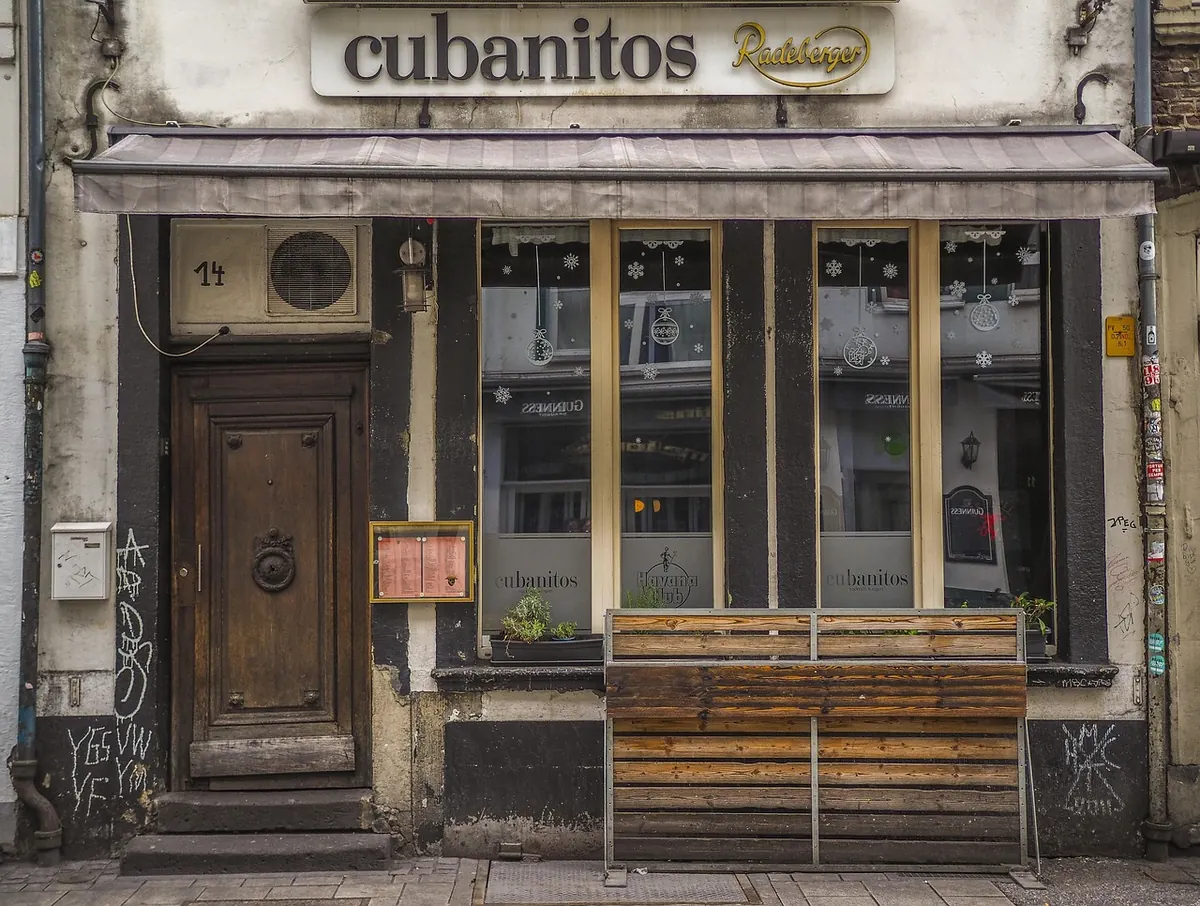
Street signs are the cheapest archive a neighborhood has, and the only one open at midnight. No appointment, no reading room, no gloves. You stand on the pavement, tilt your head back, and read a decision somebody made a century ago about what this place should be called — and, by extension, what it should be remembered for. Most of us look past those plates a hundred times a week. Learning to actually read them takes an afternoon and changes the way you walk home.
Read the sign before you read the name
The object itself is evidence. In most Italian towns you'll find three or four generations of signage layered on the same walls: carved marble plaques with Roman numerals from an earlier municipal campaign, enamelled steel plates with white letters on a blue or green ground, painted stencils, and modern aluminium screwed into old stucco. Note which one you're looking at before you note the words.
Condition tells a story too. A plate fixed over fresh plaster means the building was re-rendered — often after the war, sometimes after a flood. A marble plaque polished smooth at shoulder height shows where generations of people have leaned. A sign that has been repainted badly, with the lettering slightly thicker than it should be, probably survived a budget cut rather than a demolition.
The word in front of the name
Via, vicolo, largo, piazzetta, salita, costa, discesa, borgo, contrada, chiasso, stradone, traversa. These aren't decoration; they describe the shape of the place as it was when the name was fixed. A vicolo is a narrow lane, usually older than the wide streets that later cut around it. A salita or a costa means there was a slope worth naming. A borgo marks a settlement that grew up outside a gate and was eventually swallowed by the town. A chiasso is a dead end — if yours now runs through to another street, something was opened up.
When the word and the ground disagree, trust the word. A street called Salita that is now perfectly flat is telling you that earth was moved, a canal covered, or the name was transferred from somewhere nearby during a renumbering.
Sort the names into four buckets
Write down every street name in a radius of a few hundred metres — twenty minutes with a map and a pencil is enough — and then sort them. Almost all will fall into four groups:
- Dates and events. Via XX Settembre, Via IV Novembre, Piazza XXV Aprile, Corso Vittorio Emanuele II, Via Marconi, Piazza Matteotti. Each is a decision about which moment the town wanted to commemorate, made at a particular political temperature.
- Families and titles. Streets carrying a surname with a de', dei or degli in front usually mark land once held by that family, or a palace at the end of the road. Names with titles — conte, principe, duca — tend to be older dedications that survived later renamings.
- Trades and objects. Via dei Fornai, dei Bottai, dei Funai, dei Calderai, dei Mercanti. These are the most honest names in any town: they describe what was made or sold in the street, not who owned it.
- Places, saints and nations. Churches, gates, fountains, plus the national churches that gave whole quarters their character — the street of the Florentines, the street of the Lombards.
Then count. A quarter with a dozen trade names and no dates at all has a medieval or early-modern core. One with nothing but dates, inventors and national heroes was laid out as a plan, usually in the decades around 1900 or in the postwar boom. The proportion is the diagnosis.
Trades tell you what the street did
Trade names are the densest information on any sign. They record a specific workshop in a specific place — rope-makers needed long open yards, barrel-makers needed water and timber, smiths needed to be near a gate but not inside a palace courtyard. If a trade name now sits far from water, a market or a gate, ask what moved. Very often the answer is a covered river, a relocated market, or a fire.
Watch the spelling, too. Local dialect forms sitting inside an otherwise formal Italian name are a small fossil of when the name was written down — and by whom.
Dates are a political calendar in stone
Dedications to battles, plebiscites, armistices and republics are dated documents. They tell you when a council sat, what it felt it owed, and which anniversaries were considered uncontroversial at the time. A cluster of Risorgimento names in a grid of identical late-nineteenth-century buildings is almost always an expansion plan, named all at once by the same committee.
Postwar dedications — partisans, deportees, May 1945, April 1945 — usually appear in the newer periphery, in the housing built as the town grew outward. Where they appear in an old centre, that's a sign of a deliberate renaming, and renamings are the most interesting thing on this list.
Don't stop at the sign: read the wall
The street plate is only the loudest document on the building. Look for the quieter ones:
- Marble plaques reading già ("formerly") followed by an older name — the municipal paper trail left in public.
- Old civic numbers carved into stone doorways, sometimes still visible above or beside the modern enamel number, and often in a different sequence.
- Corner stones and district markers, which tell you where one contrada or rione ended and the next began.
- Inscriptions on fountains and church walls recording a rebuilding, a visit, a flood level, or the laying of a first stone.
- Ghost lettering: painted shop names, faded and half-scraped, that preserve the trade the street actually practised.
Photograph them as you go. Half of what you collect will only make sense once you've seen the other half.
Look for the gaps
What's missing is as readable as what's there. A street name that abruptly changes at a corner without any change in the buildings usually means two different administrations, or a boundary. A blank stretch of anonymous numbering through an old quarter often means demolition. And a name that appears twice in the same town — once in the centre, once far out — is usually a relocation: the old street was cleared, and the name was rehoused with the people who lived on it.
When you find a gap, ask. Most Italian municipalities keep a register of street naming — the odonomastica — and the office that holds it is generally small, patient and pleased that somebody cares. The local historical society, the diocesan archive and the reference desk of the main library can usually date a dedication to within a few years, which is all you need.
A method for one afternoon
- Pick a radius you can walk in two hours. Smaller than you think.
- Photograph every street plate, plus the wall around it. Note the material and the lettering style.
- Transcribe the names at home and sort them into the four buckets.
- Mark the outliers: trade names far from where the trade could work, slopes that have flattened, dead ends that now run through.
- Go back once, specifically to read plaques, old numbers and ghost signs.
- Ask one question of one archive. Just one — a date, a former name, a family. It will be answered, and it will reframe everything else.
Do this in your own neighborhood and you'll find you've been living in a place with a much longer memory than the signage suggests. The names were never neutral. Somebody argued about each one, and the argument is still there on the wall, in enamel and marble, waiting for a pedestrian to look up.
Photo: 652234 / Pixabay